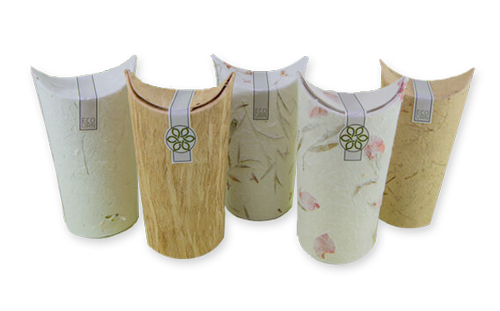
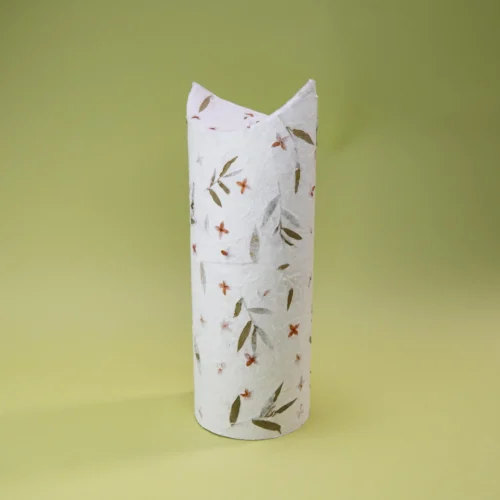
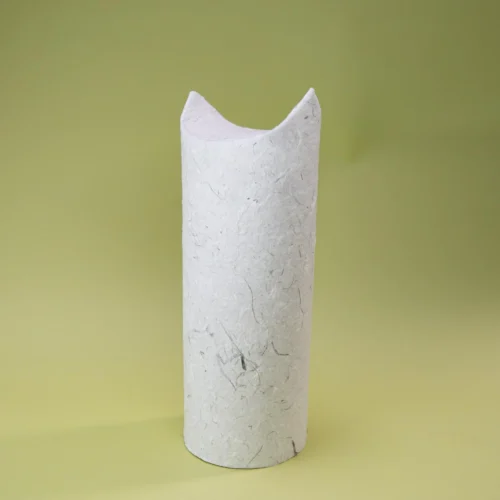
Scattering urns made of mulberry paper
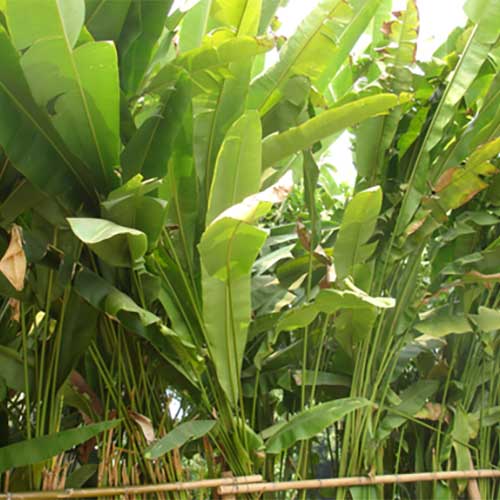
In northern Thailand grows a remarkable tree: the mulberry tree. What makes it special is that, after the rainy season, the bark can be easily peeled away, after which it immediately grows back. This property was discovered hundreds of years ago by the Karen tribe, who live in the far north of Thailand. The leaves of the mulberry tree provide food for silkworms, and the bark forms the basis for mulberry paper.
The tree grows in the wild, but is also planted for the production of this beautiful paper. Read here more
Assortment of scattering urns
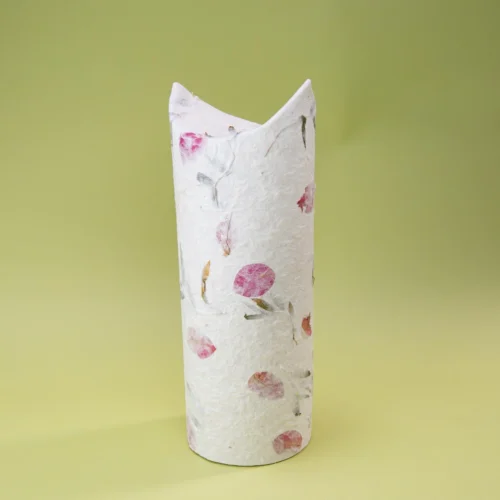
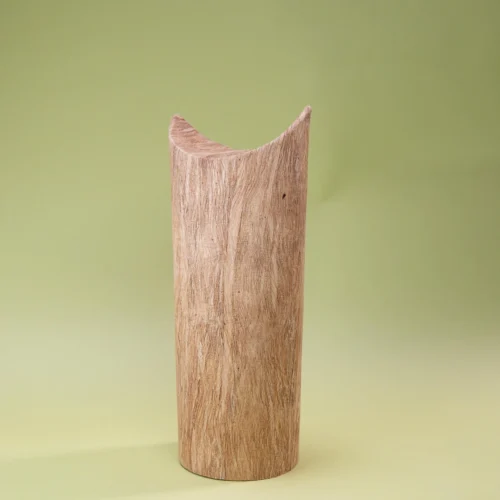
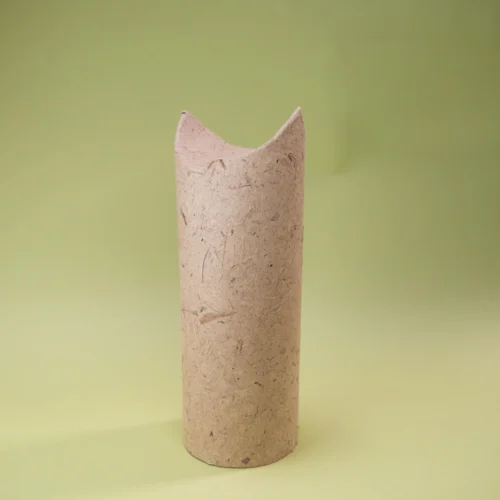
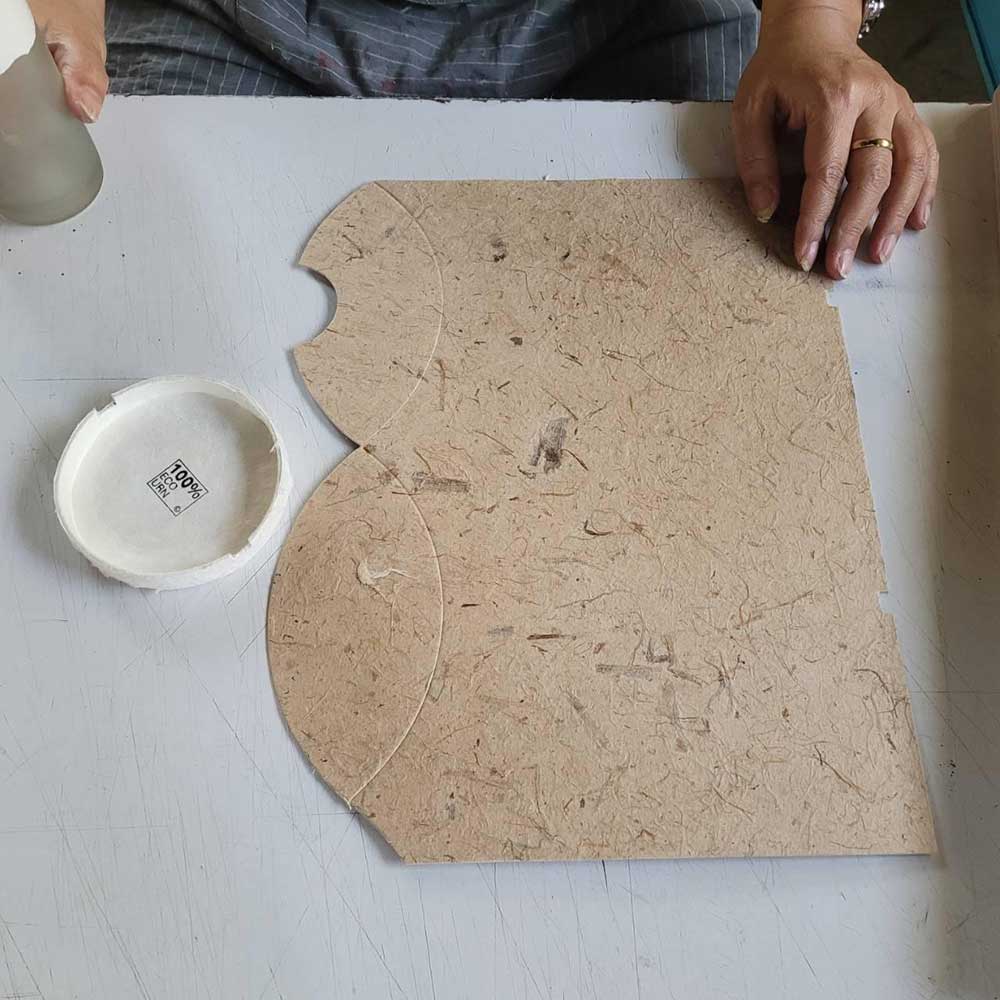
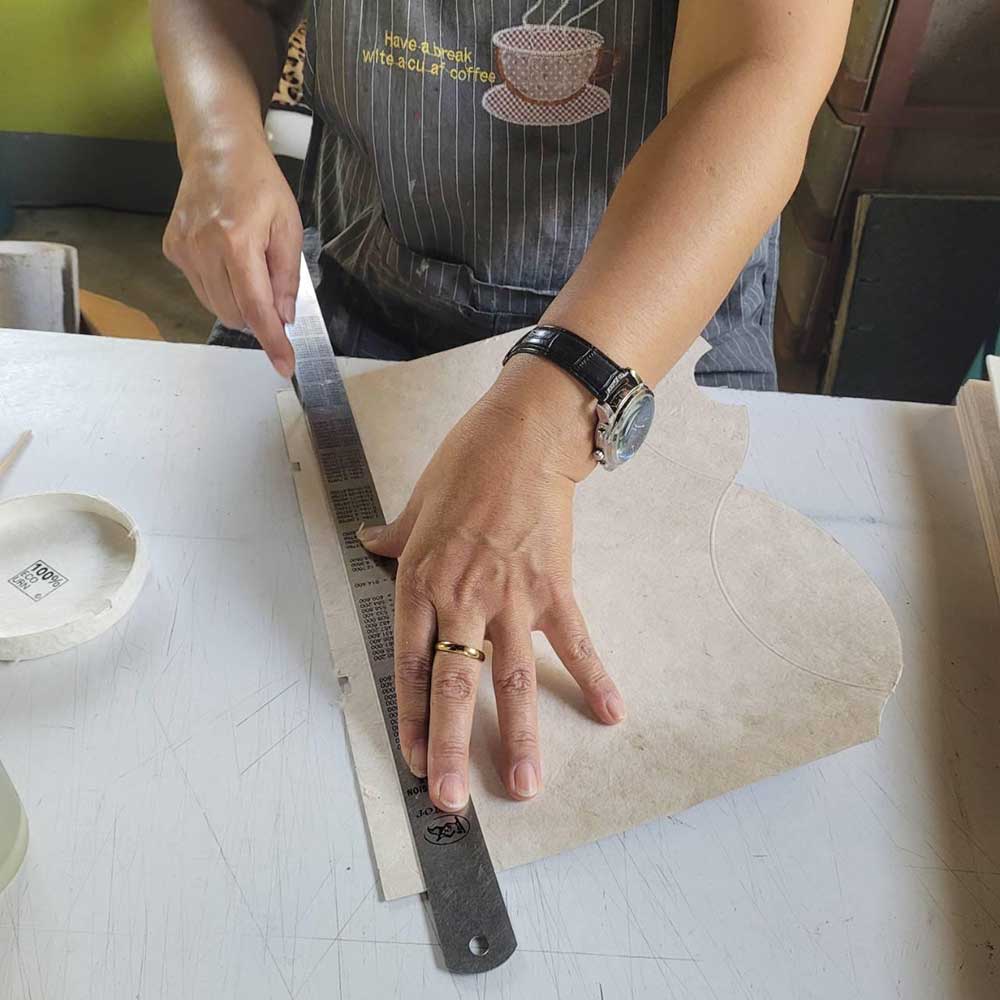
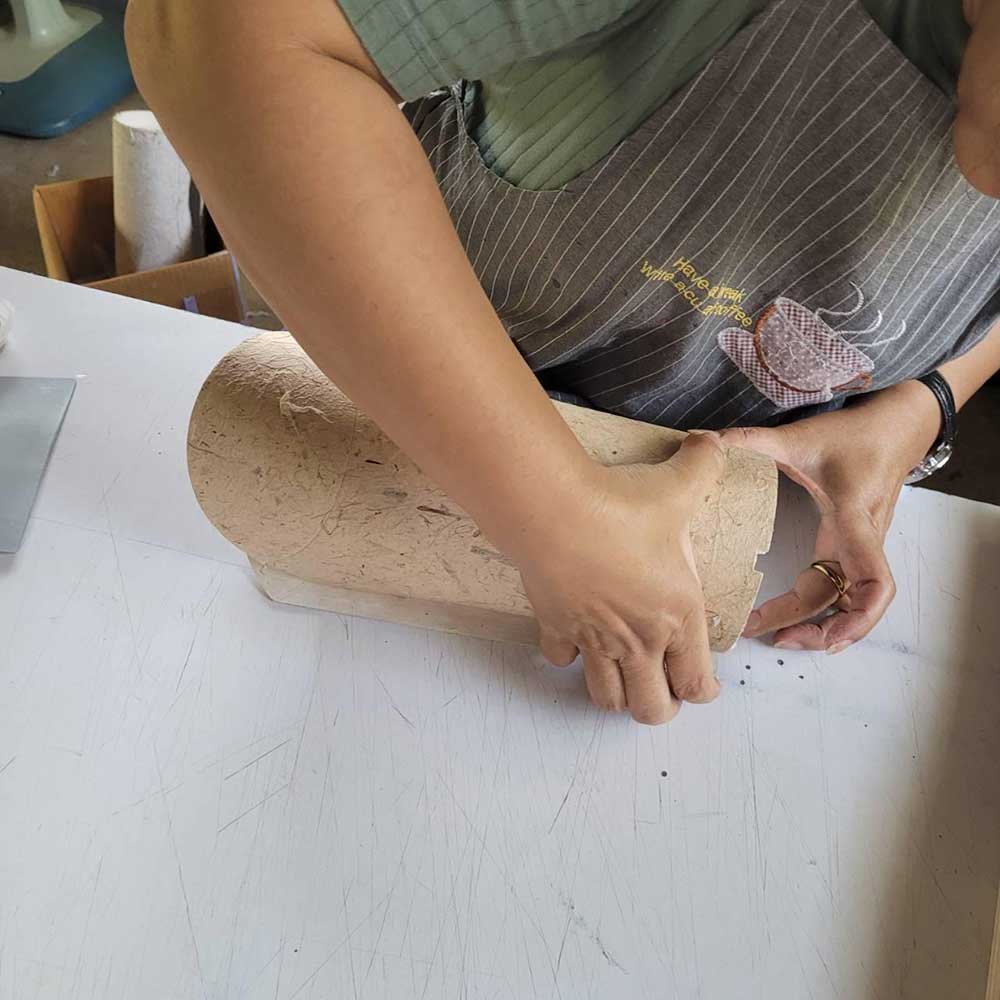
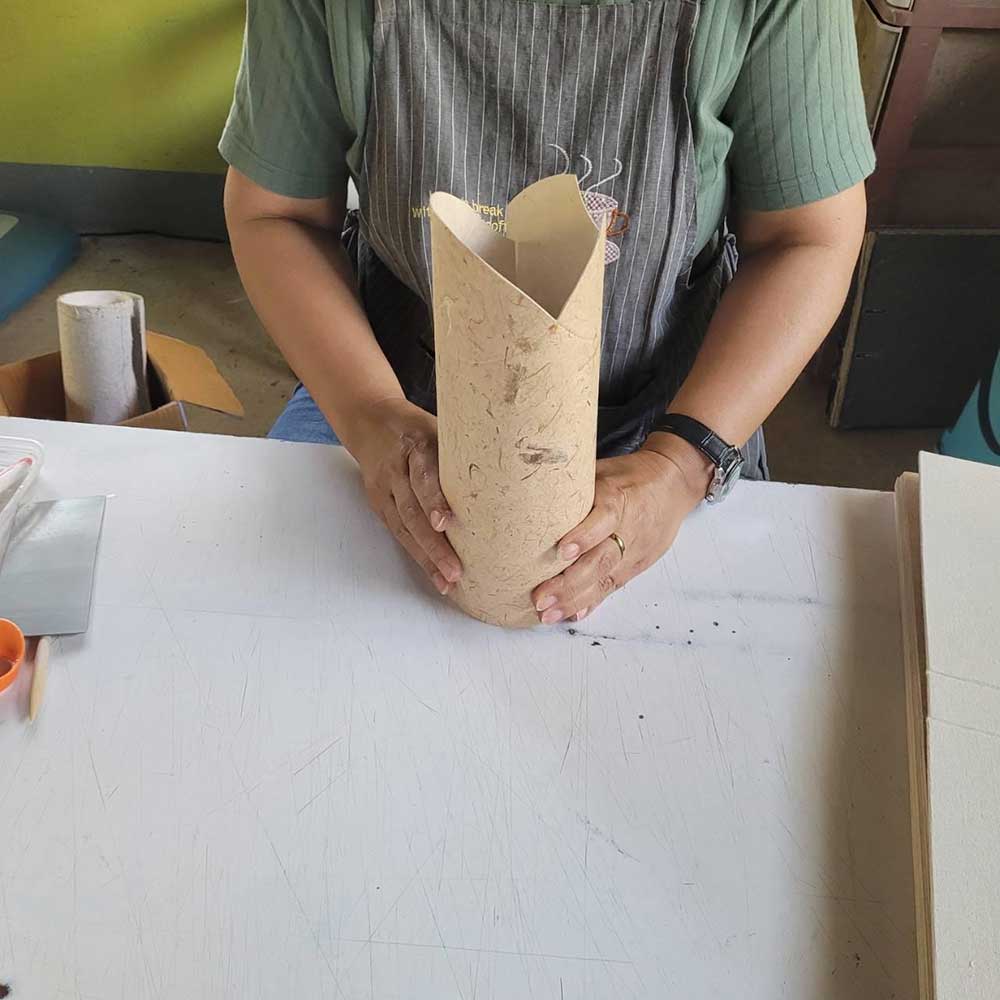
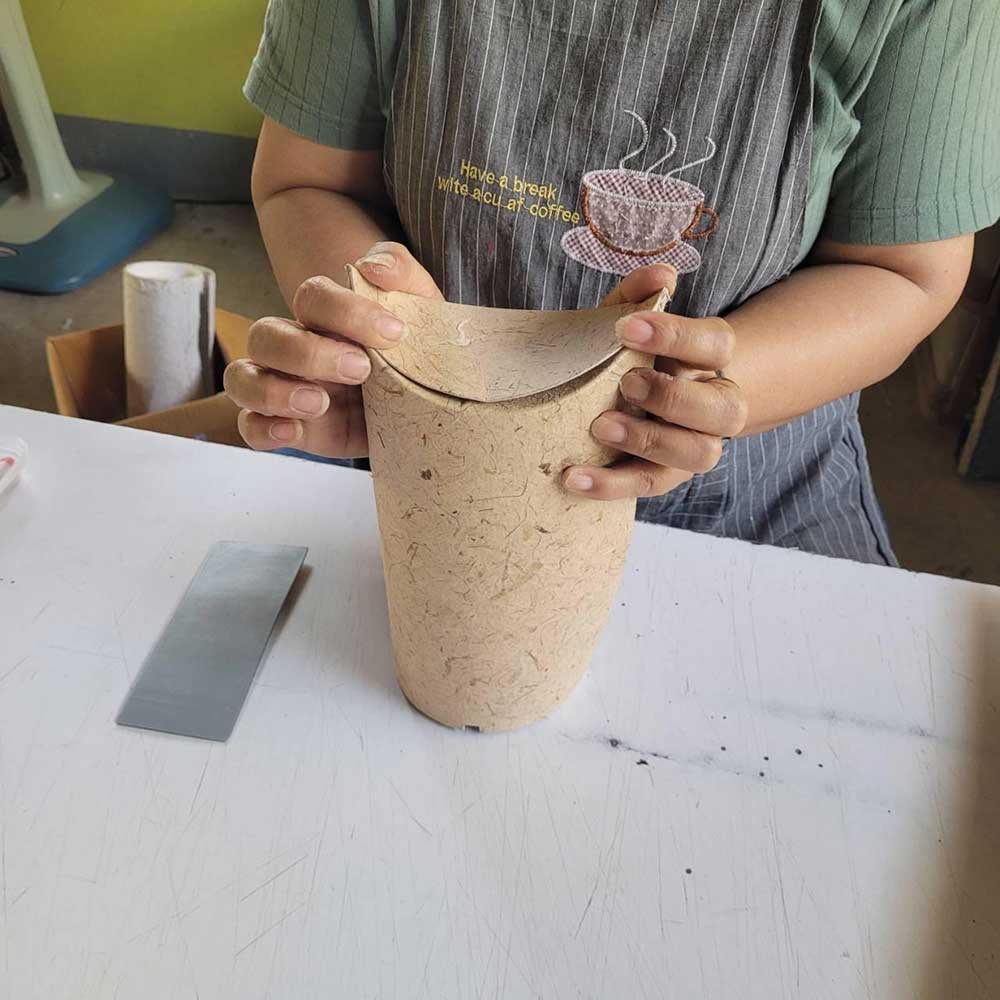
Handmade in Thailand
In northern Thailand, there are many small workshops where paper is made. The products are handmade and provide an important source of employment.
The stripped bark is boiled in large cauldrons and pulped. The paper pulp is dissolved in water, spread evenly by hand onto large paper-making frames, and items such as flower petals or dried leaves are added. The frames are then left to dry in the sun. Once the sheets are dry, they are removed from the frames, smoothed out and inspected. The paper is now ready to be dyed or printed (batik) and, if desired, made into products.